








Skin lasers: choosing a method and protecting the eyes
Skin laser treatment is a group of different procedures, not one answer to every mark, scar or line.
Consultation information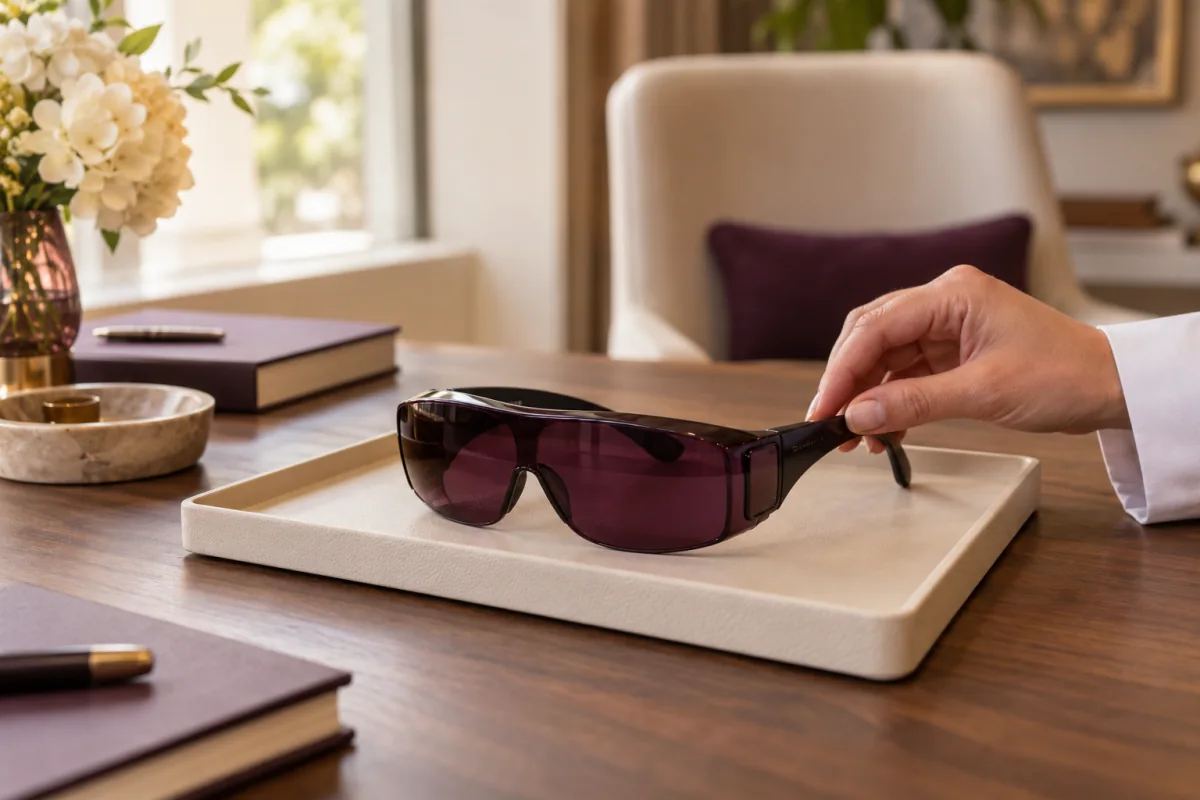
On this page
Start with the skin concern
A pigmented mark, acne scar and fine wrinkle need different assessments. Discuss changes in the lesion, previous treatment, skin colour, recent tanning and healing history. A diagnosis should come before deciding whether an appearance-focused procedure is appropriate. L1L2
| Approach | What it does | Potential use | Main limitation | Assessment question |
|---|---|---|---|---|
| Ablative resurfacing | Removes treated surface tissue | Selected texture or scar concerns | Wound care and recovery are needed | What depth and area are proposed? L2 |
| Nonablative treatment | Acts without the same surface removal | Selected skin changes | Effects and recovery differ by device | Which device matches the concern? L2 |
| Observation or another approach | Avoids this laser exposure | When laser is unsuitable or unwanted | Does not promise the same change | What alternatives fit the diagnosis? L1 |
Fractional describes a pattern of treatment and can apply to different laser types; it is not a guarantee of mild treatment. The device, settings and anatomical site must be considered together rather than chosen from a generic label. L2
Options and limitations
An assessment may lead to a laser plan, another skin treatment or no elective intervention. Discuss the intended change and what will remain. Combining procedures requires its own explanation; more treatments do not automatically mean a better outcome. L1L2
Laser may make a scar less noticeable but cannot erase it. It does not remove substantial eyelid skin excess or correct every cause of under-eye shadow. The possibility of limited benefit should be weighed against recovery and risk. L2
Preparing for assessment
Bring a list of medicines and supplements and report cold sores, diabetes, smoking, recent sun exposure and previous skin or eye procedures. Do not change prescribed medication without the relevant clinician. Tanned or inflamed skin may require postponement. L1
Risks to discuss
Burns, prolonged redness, pigmentation changes, infection and scarring can occur. Darker skin and recent tanning affect pigment risk. Periocular treatment also carries eye-injury risk; appropriate protection reduces exposure but cannot make the procedure risk-free. L2L3
Aftercare and review
Aftercare depends on the laser and the injury it creates. Follow the agreed wound-care and sun-protection plan and ask when makeup, exercise and other skin products can restart. Healing and the eventual result are different stages; review should be arranged. L1L2
Questions about skin lasers
Can laser remove a scar completely?
No. A scar can become less conspicuous while remaining present. The scar type and treatment goal matter; complete removal and identical results for every person are not realistic promises. L1
Can laser replace eyelid surgery?
No. Resurfacing targets skin characteristics and is not interchangeable with removing excess eyelid skin or correcting a low lid margin. A separate assessment is needed when a structural eyelid problem is suspected. L2
Is closing my eyes enough protection?
No. Eyelids do not provide adequate protection from all cosmetic laser exposure. Protection must match the wavelength, device and site; clinicians decide the suitable equipment. Do not remove or adjust protection yourself during treatment. L3
Should I stop medicines before treatment?
Provide the full list first. Some products or medicines may affect treatment or healing, but stopping a prescribed medicine can also cause harm. Any change should be agreed with the prescribing clinician and treating team. L1
When can I return to normal activities?
There is no single timetable across all lasers. Surface injury, treatment extent, skin response and your activities matter. Ask for an individual plan and warning signs rather than assuming a procedure marketed as gentle has no downtime. L2