
Eye Area Surgery and Medical Aesthetic Services
Learn about assessments at the private practice in Maslak, Istanbul. Browse procedures by category and open a service page for the process, risks and follow-up. Treatment selection depends on an individual examination.
Eye Area Surgery and Medical Aesthetic Services
Eye Area Surgery and Medical Aesthetic Services
Eye area surgery


Blepharoplasty: understanding eyelid surgery
Blepharoplasty addresses excess eyelid skin and, when appropriate, the underlying fat. Assessment may concern appearance, interference with the upper field of vision, or both. A heavy-looking upper eyelid does not identify the cause on its own: skin, eyelid position and brow position need to be considered together.
Learn More
Aesthetic eye surgery: which structure needs assessment?
Aesthetic eye surgery should address the structure responsible for a concern. Excess eyelid skin, a low eyelid margin and brow descent are different findings that may coexist. An individual eye examination assesses vision, muscle function, closure and dryness before discussing observation or surgery. One operation cannot be assumed to correct every cause.
Learn More
Almond-eye surgery: what should you know about canthoplasty?
Canthoplasty changes the support or position of the outer eyelid corner; it differs from canthopexy and blepharoplasty. Suitability requires examination of eyelid stability, closure, eye surface and individual anatomy. Benefits must be weighed against risks. A photograph cannot establish suitability or guarantee eye shape, symmetry or lasting results.
Learn MoreMedical aesthetics and non-surgical options

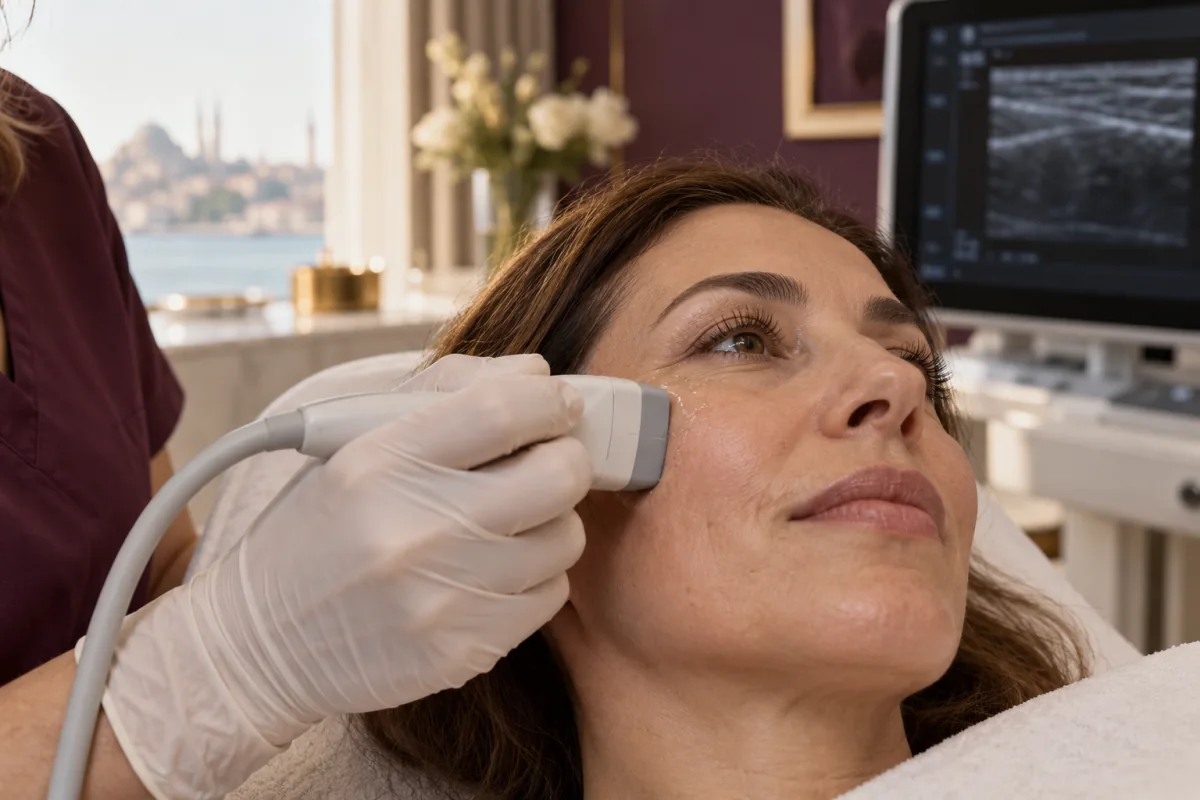
Ultrasound-assisted filler dissolution: what should be assessed first?
Filler dissolution aims to reduce hyaluronic acid filler using the enzyme hyaluronidase. It is not a universal reversal for every injectable material. The original product, its location and the reason for concern matter before choosing another procedure. Ultrasound may help the assessment, but does not make an injection risk-free.
Learn More
Botulinum toxin: what should be assessed before treatment?
Botulinum toxin temporarily reduces selected lines caused by facial muscle activity; it does not add volume like a filler. A clinician must assess your goals, health, medicines and previous injections before choosing a product. Results vary, and risks and symptoms requiring urgent medical attention should be discussed before treatment.
Learn More
Dermal filler: is a hollow, a bag or a dark circle the concern?
Dermal fillers add volume in selected areas. Under the eyes, a tear-trough hollow differs from protruding fat, malar swelling and pigment or visible vessels. These findings can coexist and require individual examination before choosing treatment. Filler does not address every cause of a dark circle, and its benefits must be weighed against risks.
Learn More
Skin quality injections: hydration, product identity and limits
“Skin glow” or skin quality injections do not identify one standardized product.
Learn More
Thread lifts: support, limitations and recovery
A thread lift places medical sutures to support selected facial tissues.
Learn More
RF microneedling: device differences and important risks
RF microneedling uses small electrodes to deliver radiofrequency energy into or beneath the skin, producing heat.
Learn More
Skin lasers: choosing a method and protecting the eyes
Skin laser treatment is a group of different procedures, not one answer to every mark, scar or line.
Learn More
Mesotherapy: ingredients, evidence and injection safety
Mesotherapy describes multiple small injections of selected substances rather than one standardized product.
Learn More
PRP: preparation, evidence and injection risks
PRP is platelet-rich plasma prepared from your own blood.
Learn MoreUnderstanding terms and limits of the evidence


Biofiller: blood-derived materials, evidence and uncertainties
Here, biofiller means filler-like material prepared from your own blood, not transferred fat.
Learn More
Exosomes: product identity, evidence and regulatory questions
Products described as exosomes should not be treated as one established skin treatment.
Learn More
Stem cells in aesthetics: product, evidence and safety questions
“Stem cells” does not define one product or a standard aesthetic procedure.
Learn MoreExplore a procedure in more detail
Similar names do not mean identical products, methods or results. Ingredients, treatment areas, alternatives and individual suitability need separate consideration.
Aesthetic Eyelid Surgery

- Upper Eyelid BlepharoplastySurgery addressing excess skin and fat in the upper eyelid. Eyelid structure and the eye surface are assessed first.
- Lower Eyelid BlepharoplastySurgery addressing lower eyelid bags and laxity. The approach depends on fat distribution and eyelid support.
- Surgical Brow LiftSurgery to reposition the brow. Examination distinguishes a low brow from a drooping eyelid.
- PtosisDrooping of the upper eyelid. Its cause and the function of the eyelid lifting muscle guide treatment selection.
Botulinum Toxin

- Expression Lines (One Area)Assessment for botulinum toxin treatment of lines caused by muscle movement in one facial area.
- Three-Area TreatmentThe forehead, frown area and outer eye corners are assessed together. Injection sites depend on muscle movement.
- Jaw Muscle (Masseter)Treatment directed at the chewing muscle. Assessment includes jaw clenching symptoms and chewing function.
- Underarms (Sweating)Considered for excessive underarm sweating. The cause of sweating and other treatment options are discussed.
Dermal Fillers

- Lip FillerAn injection procedure addressing lip volume and borders. Existing filler, lip anatomy and expectations are assessed.
- Under-Eye FillerFiller for under-eye hollows. Dark circles or puffiness do not always result from a lack of volume.
- Upper Eyelid FillerA volume treatment for upper eyelid hollowing. Eyelid movement and surrounding tissue anatomy are examined.
- Temple FillerA treatment for volume loss in the temples. Blood vessel anatomy and facial proportions inform planning.
- Forehead FillerFiller addressing forehead contour and volume. Vascular anatomy and suitability are assessed during examination.
- Midface FillerA volume treatment for the cheeks and cheekbone area, planned in relation to the rest of the face.
- Nasolabial Fold FillerConsidered for folds running from the nose to the mouth corners. Midface support is also examined.
- Chin FillerA volume treatment for the chin and jawline. Facial profile and bite relationships are assessed.
- Skin Quality FillerA superficial injection approach addressing skin texture and hydration. Product and depth are selected after assessment.
Collagen Biostimulation

- Hybrid Biostimulatory FillerCovers products combining filler and biostimulatory components. Composition and intended use vary by product.
- Calcium HydroxyapatiteA class of fillers containing calcium hydroxyapatite. Tissue anatomy guides assessment of the treatment area and method.
- Biostimulatory FillerInjectable products intended to stimulate a tissue response. Effects and risks depend on the substance used.
- Liquid Facial Rejuvenation (Hybrid)Combined planning of injections for different facial areas. It is a different procedure from a surgical facelift.
Eye Area Rejuvenation

- Skin Renewal SerumProduct assessment for the skin around the eyes. Ingredients, application route and session needs are discussed.
- Radiance SerumCare assessment for uneven tone around the eyes. Pigmentation and volume loss are examined separately.
- Polynucleotides (Salmon DNA)Periocular assessment for products containing polynucleotides. Product origin and individual suitability are discussed.
- Eye Area RevitalisationAssessment of fine lines, dryness and a tired appearance. Care options are discussed according to the findings.
Skin Radiance & Boosters
- Intensive Hydration SkinboosterHyaluronic acid products intended for skin hydration. They are assessed for different purposes from volumising fillers.
- Radiance Serum ProtocolA care approach for skin tone and hydration. Product ingredients and session intervals are discussed at consultation.
- Skin Renewal SerumSerum applications addressing skin texture. Application route and product selection depend on skin assessment.
- Enzyme-Based SerumSkin assessment for enzyme-containing products. Intended use, ingredients and sensitivity history are reviewed together.
- LipolysisA term used for treatments targeting localised fat. The product, treatment area and risks require assessment.
Stem Cell · Exosome · PRP

- Exosome ApplicationProducts described as exosomes differ in composition and evidence. Their origin, application route and evidence require review.
- Plant-Derived ExosomesA name used for products containing plant-derived vesicles. Equivalence to human-derived products should not be assumed.
- Autologous Stem Cells (Tissue)Autologous means derived from a person’s own tissue. Cell content, preparation method and supporting evidence require assessment.
- Autologous Stem Cells (Face)Covers autologous tissue procedures considered for the face. Product composition and suitability need individual assessment.
- Scalp TreatmentThe cause of hair loss and the scalp are assessed. The diagnosis guides the choice of approach.
- PRPPlatelet-rich plasma prepared from a person’s own blood. Its intended use and preparation method are discussed.
- PolynucleotidesA group of products containing polynucleotides. Origin, composition, intended use and evidence are assessed for each product.
Thread Lift

- French Thread LiftA technique using medical threads to support facial tissues. Thread material and the suitable area are discussed at consultation.
- Single Thread LiftPlacement of a thread in a selected area. The number and position of threads are planned according to tissue anatomy.
- Absorbable Threads (PDO)A procedure using polydioxanone threads that are absorbed over time. Thread type and follow-up needs are assessed first.
Fractional RF Microneedling
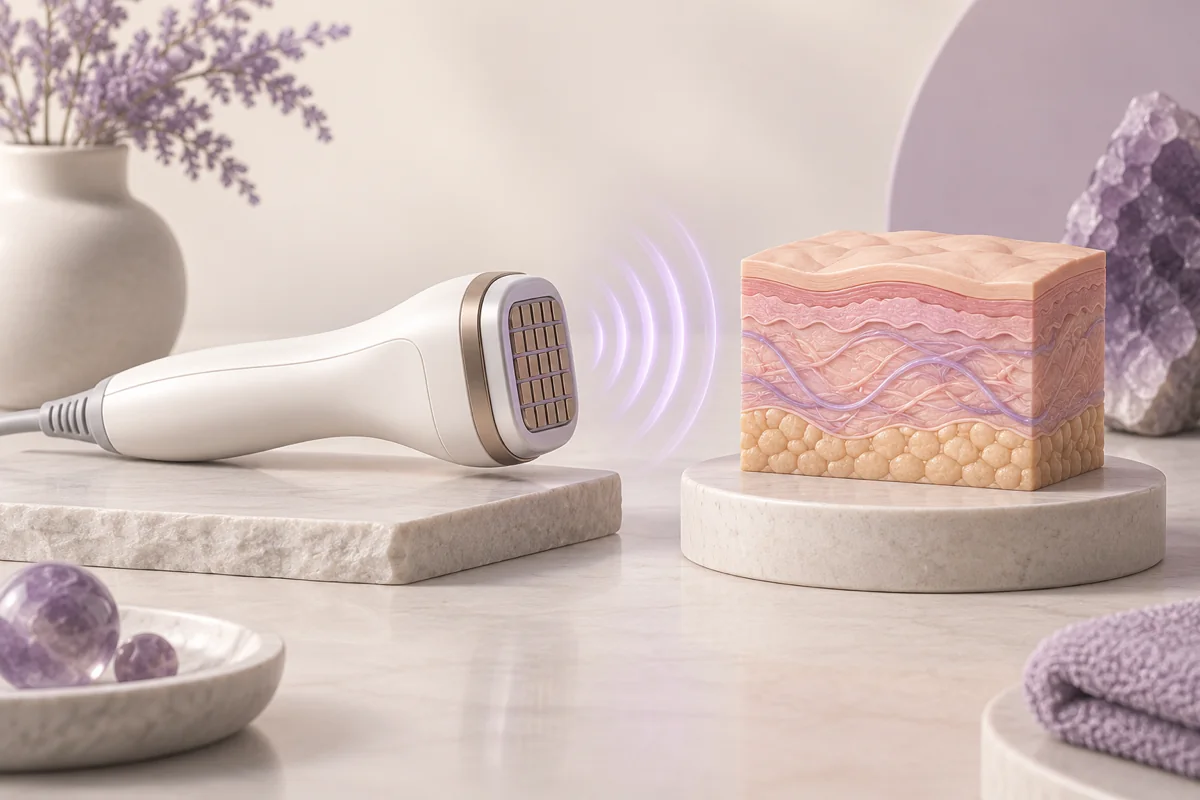
Ultrasound & Filler Dissolving