

Contact lenses, glasses and makeup: preparing for an eyelid examination
Contact lenses, glasses and eye-area products help explain your everyday experience and should be mentioned at an eyelid consultation.
Consultation information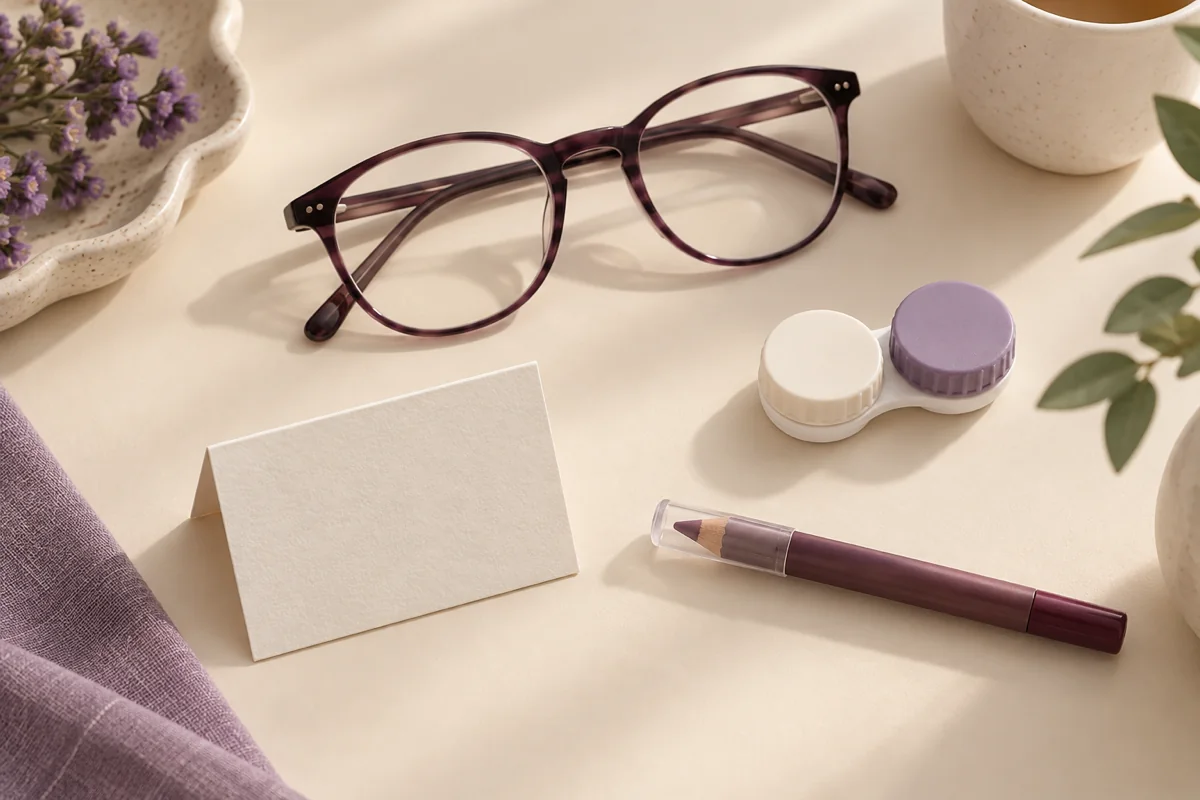
On this page
Why discuss everyday use?
Glasses and contacts address refractive error; eyelid position and the eye surface need separate assessment. Timing of lens discomfort, dryness and drops may be useful. Do not restrict the discussion to appearance. L1D1
| Use | Information to bring | Examination focus | Question to ask | Limitation |
|---|---|---|---|---|
| Glasses | Current glasses and daily experience | Vision needs | Is a vision check needed? | Does not diagnose an eyelid problem L1 |
| Contact lenses | Lens type and wear pattern | Fit and eye surface | Does use relate to symptoms? | Discomfort should not be assumed normal L1 |
| Makeup or adhesive | Product name and reaction timing | Possible irritation or allergy | Which product preceded symptoms? | A brand name does not prove causation M1 |
The table prepares a conversation. Lenses, drops and cosmetics have different purposes; changing one should not be presented as the single answer to every symptom. L1M1
Which options may be considered?
Assessment may identify separate vision, surface or product-related concerns. An eyelid procedure is not automatic; discuss existing treatment and alternatives with the clinician. D1C1
Eyelid surgery does not promise freedom from glasses or certain relief of dry eye. Return to lenses and makeup depends on the procedure and healing and needs separate instructions. B1D1
How should you prepare for the appointment?
Ask about removing lenses and avoiding makeup for arrival. Bring lens details, medicines and drops, and names of products you suspect caused problems. Do not stop prescribed drops yourself. L1M1C2
Which risks matter?
Improper lens use can be associated with infection or corneal injury. Cosmetics can cause contamination, irritation or applicator injury. Seek assessment rather than covering symptoms with more product. L1M1
What should be recorded afterwards?
Record how symptoms change after any agreed change in use. Timing alone does not diagnose allergy. Follow-up also considers vision and the surface; agree on a personal plan for resuming lenses. L1D1
What are the common questions?
Should I bring my lens case?
Lens type and care-system information are useful; ask what to bring. An old case does not replace a fitting examination or assessment of proper use. L1
Why mention the makeup product name?
It can help identify ingredients and timing. Report irritation associated with a product; its name alone cannot establish allergy or safety. M1
When can lenses be worn after surgery?
There is no universal day. The team should give instructions based on the procedure, surface and healing; do not adopt an unrelated online timetable. B1
Do glasses rule out dry eye?
No. Dry eye has several possible causes. Wearing glasses does not make surface assessment unnecessary. D1
Should lens-related pain wait for my appointment?
No. Remove the lenses and seek assessment; severe pain or sudden vision loss needs emergency help. Do not continue wearing lenses to push through symptoms until a cosmetic appointment. L1E1