

Can a thread lift change heaviness around the eyelids?
A heavy-looking upper eyelid may reflect a low brow, excess skin or a low eyelid margin.
Consultation information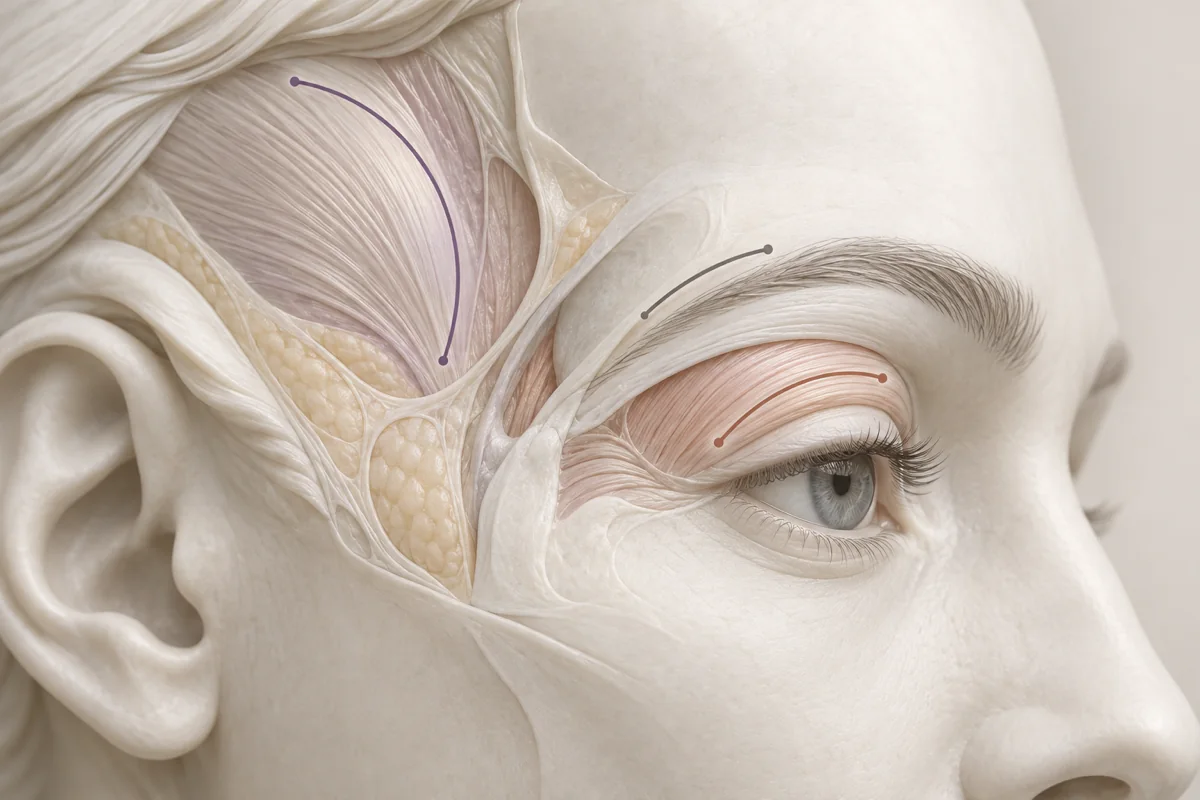
On this page
What is causing the heavy appearance?
The first question is where the change originates. Brow descent can crowd the upper lid, excess skin can fold over it, and ptosis lowers the lid margin itself. Eyelid movement, closure, asymmetry and visual symptoms help guide assessment; a label such as lifting does not identify the cause. B1P1
| Finding | What is assessed | Why it may look heavy | What it is not | Question for the examination |
|---|---|---|---|---|
| Low brow | Brow position relative to the lid | It can contribute to overhanging skin | Not automatically eyelid ptosis | Is the brow the main contributor? B1 |
| Excess lid skin | Skin fold and eyelid function | Skin may overhang the upper lid | Not proof that the lifting muscle is weak | What would skin treatment leave unchanged? B1 |
| True ptosis | Height and function of the lid margin | The margin may obstruct the visual field | Not simply loose skin | Does the cause need further investigation? P1 |
This comparison explains why one procedure cannot be assumed to solve every heavy-lid complaint. More than one finding may coexist. Deciding which matters most requires examination; lifting a brow for a photograph does not demonstrate a lasting treatment effect. B1P1
Where might a thread lift fit?
If a thread lift is proposed, ask which tissue and appearance it aims to change. Discuss the material, expected limits, alternatives and recovery demands. General information about facial thread lifting is not evidence that threads restore eyelid lifting-muscle function. T1T2
Thread-lift results are not guaranteed and natural aging continues. The sources cited here do not establish a universal duration or prove treatment of true ptosis. An early lifted appearance or swelling is not a reliable measure of lasting functional benefit. T2P1
What should I ask before deciding?
Ask who will perform the procedure, what experience they have in the area, and how problems will be managed. Describe prior surgery or injections and any new symptoms. Request a clear aftercare contact and time to consider the proposal without a same-day commitment. C2T1
What risks should I understand?
Possible thread-lift problems include infection, thread extrusion, persistent pain, swelling, bruising and an unsatisfactory result. Avoid describing the procedure as risk-free because the threads may be absorbable. Individual risks and what would require review should be discussed before consent. T1
How should a result be reviewed?
Review healing and symptoms before judging the result. Follow the clinician's care instructions and avoid trying to pull or reposition a thread yourself. Persistent pain, visible material or dissatisfaction should trigger clinical review, not an automatic repeat procedure or a promised correction. T2
What else should I know about threads and eyelids?
Can threads correct true eyelid ptosis?
Do not assume so. True ptosis involves the eyelid margin and its lifting mechanism. The general thread-lift sources here do not establish correction of that problem; diagnosis should determine the discussion of appropriate options. P1T1
How long will a thread lift last?
There is no universal duration established by these sources. Material, procedure and the individual situation need discussion. Aging continues and results cannot be guaranteed; ask when the outcome will be assessed rather than relying on a fixed longevity promise. T2
Should a new drooping eyelid be treated cosmetically?
It needs medical assessment first. Ptosis has different possible causes, including muscle or nerve problems. New or changing droop should not be assigned to aging or sent straight to an elective cosmetic procedure without evaluation. P1
Can I adjust a visible or uncomfortable thread myself?
No. A visible thread or persistent discomfort needs assessment by the treating clinician. Pulling, cutting or attempting to move it can interfere with the area; this guide provides no home adjustment or removal technique. T1T2
Does avoiding a long incision guarantee no mark?
No. A smaller entry point is not a guarantee of a mark-free or complication-free result. Threads and eyelid surgery have different purposes and risks. Compare relevant outcomes after diagnosis, not merely the length of an incision. B1T1
Sources
- B1: Cambridge University Hospitals — Blepharoplasty
- P1: Cambridge University Hospitals — Ptosis Correction (Adults)
- C2: NHS — Choosing who will do your cosmetic procedure
- T1: American Society of Plastic Surgeons — Thread lift safety
- T2: American Society of Plastic Surgeons — Thread lift results
- E1: NHS — Eye pain
- E2: NHS — Eyelid problems