


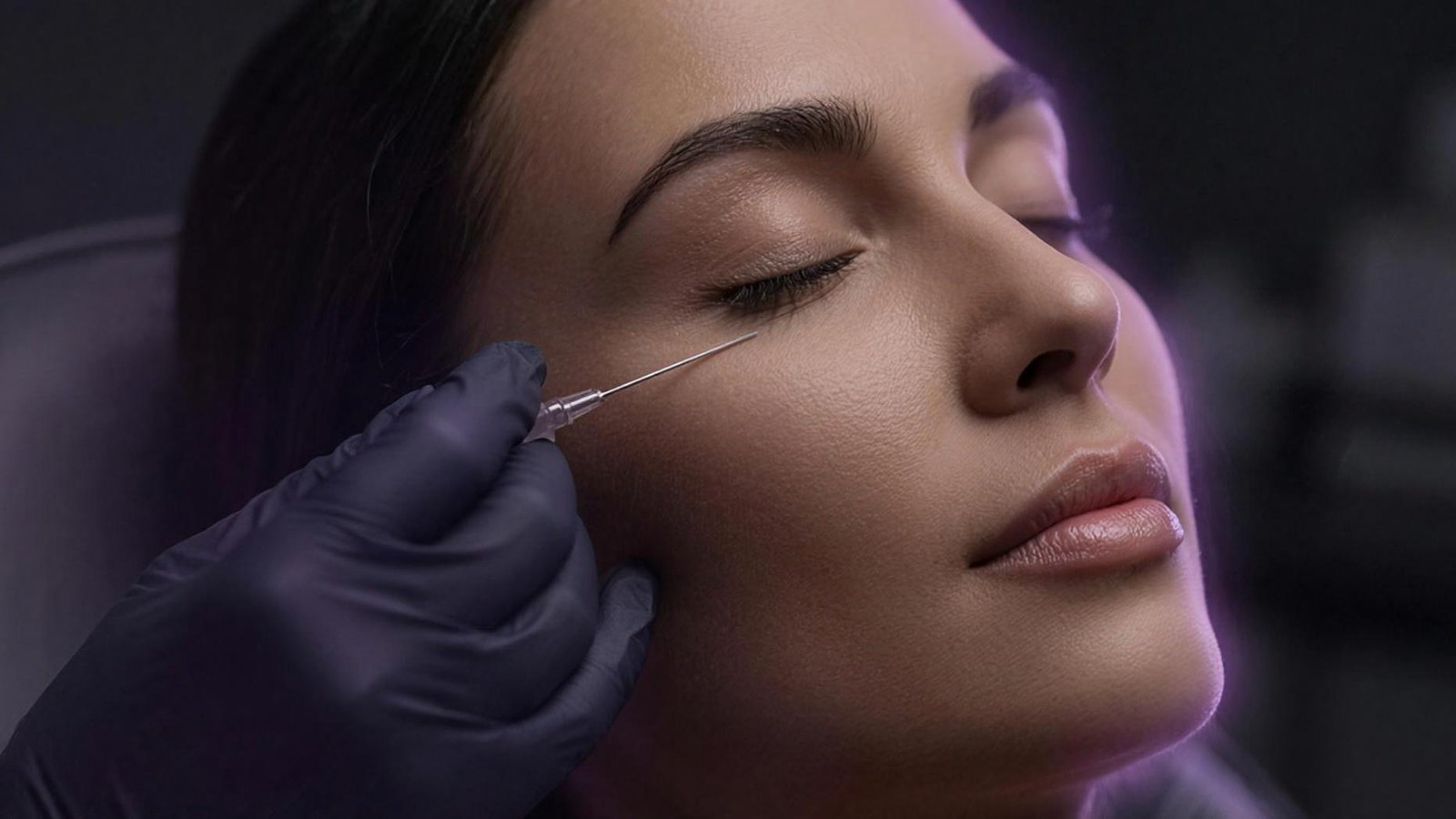
Under-eye filler may be considered for a tear-trough hollow in selected adults, but bags, oedema, pigment and loose skin do not respond in the same way. Thin skin and vascular connections make detailed anatomical assessment essential. Swelling, bruising, irregularity, Tyndall effect, nodules and asymmetry can occur; rare vascular occlusion may cause tissue loss, visual impairment, blindness or stroke. Hyaluronidase can dissolve some hyaluronic acid products but does not guarantee safety. Suitability is assessed in person at the Maslak clinic in Istanbul.
What Is an Under Eye Filler Treatment?
Under eye filler is an injectable treatment designed to address volume depletion in the infraorbital region. The procedure involves placing a biocompatible gel, most commonly hyaluronic acid, beneath the skin to fill hollows and reduce the appearance of dark circles. Unlike surgical interventions such as blepharoplasty, this approach requires no incisions and involves minimal downtime.
Hyaluronic Acid: The Primary Filler Material
Hyaluronic acid (HA) is a naturally occurring substance in the human body, found abundantly in skin, connective tissue, and eyes. In its cross-linked injectable form, HA provides structural support and attracts water molecules, creating a subtle volumizing effect. According to research published in the National Library of Medicine, hyaluronic acid fillers demonstrate a favorable safety profile for periorbital applications when administered by experienced practitioners. Hyaluronidase can reduce some HA fillers, but it does not guarantee reversal of every complication; suspected vascular occlusion needs urgent assessment.
Understanding the Tear Trough
The tear trough is an anatomical depression that runs from the inner corner of the eye along the orbital rim toward the cheek. With aging, fat pad descent, bone resorption, and skin thinning cause this groove to deepen. The result is a shadowed, hollowed appearance that may make a person look fatigued regardless of how well-rested they are. This delicate area requires precise technique due to its thin skin, proximity to important blood vessels, and the risk of visible irregularities.
Who Is a Suitable Candidate for Under Eye Filler?
Candidacy for tear trough filler treatment is determined on an individual basis during a medical consultation. Generally, this procedure may be considered for individuals who present with:
- Visible hollowing or volume loss beneath the eyes
- A deep tear trough groove creating a tired or aged appearance
- Dark circles caused by shadowing rather than pigmentation
- Good overall health with no active skin infections in the treatment area
- Realistic expectations about outcomes
Certain conditions may preclude treatment. Active eye infections, autoimmune disorders, pregnancy or breastfeeding, bleeding disorders, and known allergies to filler components are among the contraindications. Patients with significant under eye bags or excess skin may benefit more from surgical options like lower blepharoplasty rather than filler injections.
How Is the Under Eye Filler Procedure Performed?
The treatment process follows a structured approach to optimize both safety and outcomes. Here is what patients can typically expect during an under eye filler session.
Consultation and assessment: The physician evaluates the periorbital anatomy, including skin thickness, degree of volume loss, vascular patterns, and the presence of fat herniation. This assessment determines whether filler is appropriate or if alternative treatments should be considered.
Preparation: The treatment area is cleansed with antiseptic solution. A topical numbing cream may be applied 20-30 minutes before the procedure to enhance comfort. Many modern HA fillers contain integrated lidocaine, which further reduces sensation during injection.
Injection technique: The filler is delivered using either a fine needle or a blunt-tipped cannula. For the tear trough region, many practitioners prefer a cannula approach, as it may reduce the risk of bruising and vascular complications. The product is placed in deep tissue planes, typically at the periosteal level or deep dermis. The entire procedure usually takes 15 to 30 minutes for both eyes.
Post-treatment evaluation: After injection, the physician assesses symmetry and contour. Minor adjustments can be made immediately. Patients receive detailed aftercare instructions before leaving the clinic.
Recovery Process After Under Eye Filler
One of the advantages of non-surgical under eye filler treatment is the relatively short recovery period. However, individual healing varies and patients should plan accordingly.
- First 24-48 hours: Mild swelling, redness, and tenderness at injection sites are common. Cold compresses can help manage these symptoms.
- Days 3-7: Bruising may develop, particularly in patients taking blood-thinning medications or supplements. This typically resolves within one to two weeks.
- Weeks 2-4: The filler settles into its final position as any residual swelling resolves. The true result becomes visible during this period.
During recovery, patients should avoid strenuous exercise for 24-48 hours, refrain from massaging the treated area, stay away from excessive heat exposure such as saunas, and apply sun protection diligently. The longevity of hyaluronic acid under eye fillers typically ranges from 9 to 18 months, depending on individual metabolism, lifestyle factors, and the specific product used.
Risks and Important Considerations
As with any medical procedure, under eye filler carries certain risks that patients should understand before proceeding. Training and anatomical knowledge may reduce risk but cannot eliminate vascular occlusion, tissue loss, visual impairment, blindness or stroke.
Potential complications include prolonged swelling, bruising, asymmetry, the Tyndall effect (a bluish discoloration when filler is placed too superficially), nodule formation, and in rare cases, vascular occlusion. The periorbital region is anatomically complex, with critical blood vessels in close proximity to injection sites. Therefore, this treatment should only be performed by a physician with extensive knowledge of facial and orbital anatomy.
Op. Dr. Havva Gül Yıldız brings her oculoplastic surgery expertise to every consultation, conducting thorough anatomical assessments to develop individualized treatment plans. Complementary treatments such as botulinum toxin for crow's feet or mesotherapy for skin quality improvement may also be discussed as part of a comprehensive periorbital rejuvenation approach. As a T.C. Ministry of Health Authorized Health Tourism Facility, our clinic welcomes international patients seeking specialized eye area treatments in Istanbul.
Frequently asked questions
Can under-eye filler correct every dark circle?
No. A hollow that creates shadow may respond, while pigment, thin skin, visible vessels, oedema or prominent bags may not. In an unsuitable candidate, filler can worsen swelling or irregularity. Examination should identify the main cause and compare non-treatment, surgical and non-surgical alternatives.
Does dissolving hyaluronic acid make treatment risk-free?
No. Hyaluronidase can reduce some hyaluronic acid fillers, but it cannot be guaranteed to reverse every complication fully or immediately. Unusual pain, sudden vision changes, an abnormal white, grey or blue change in skin near the injection site, or stroke symptoms after filler require immediate medical attention. Seek emergency medical care without delay and notify the treating clinic; do not wait for a routine appointment.
How long does the effect last, and is it predictable?
Duration varies with the product, placement, anatomy and individual biology, so one time range cannot be promised. Early swelling may obscure the result, and delayed swelling or irregularity can occur. Expected change, uncertainty and the possibility of further treatment should be discussed during assessment.
Related guides
Sources
This content provides general information, not a diagnosis or personal treatment recommendation. Suitability, risks and alternatives require an individual medical assessment.

Related Posts

Ultrasound-Guided Filler Dissolving in Istanbul: A Targeted Assessment
Ultrasound-guided filler dissolving can help locate previous filler and nearby anatomy, but it is suitable only for specific...
Read More
What Is Biofiller? Evidence, Uncertainty and Risks
What small studies of autologous plasma-gel biofiller show, what remains uncertain, and which injection risks still matter.
Read More
Upper Eyelid Filler in Istanbul: Hollowing, Ptosis and Tear Troughs
Upper eyelid filler may be considered for selected volume loss; it does not treat ptosis and is distinct...
Read More