What Is Blepharoplasty? Upper and Lower Lid Guide
Eye Aesthetics

What Is Blepharoplasty? Upper and Lower Lid Guide

13 min read hgcadmin

what is blepharoplasty? The answer involves more than a cosmetic change because the upper and lower eyelids have different structures and functions. Depending on examination findings, surgery may address excess skin, fat position, or specific problems with eyelid support, but the same technique does not suit everyone. Dry-eye symptoms, medicines, previous operations, other health conditions, and expectations require assessment. Healing and appearance vary between people; scarring, asymmetry, incomplete eyelid closure, and rare sight-threatening complications are possible. An examination is for individual diagnosis and planning, not a promise of a particular result.

What Is Blepharoplasty?

Blepharoplasty is a general term for surgery that may be performed on the upper eyelid, lower eyelid, or both. It may address examination findings such as excess skin, prominent fat pads, or eyelid support. The aim and extent may be planned for cosmetic, functional, or combined reasons; the possible change depends on the person's anatomy and the selected technique.

If excess upper-eyelid skin affects the visual field, a functional assessment may be appropriate. In addition to symptoms, this may involve an eye examination, photographs, and visual-field testing when indicated. Ptosis, in which the eyelid margin itself droops, is different from excess skin and may require a separate procedure; blepharoplasty does not correct every vision problem.

Dermatochalasis, ptosis, brow droop, and lower-eyelid bags are distinct problems. Dark circles or hollows may also have causes other than fat position. The name of the procedure alone therefore does not determine which tissue would be changed or what result would occur; options, limitations, and alternatives including no surgery are compared during an individual assessment.

Upper Eyelid Surgery

In upper blepharoplasty, an incision may be planned along the natural eyelid crease in suitable patients. The extent varies with examination findings and may include one or more of the following:

  • Measured removal of excess skin
  • Preservation, contouring, or repositioning of fat pads
  • Addressing muscle or eyelid support only to the extent considered necessary
  • Placing the incision in the natural crease; every surgical incision can nevertheless leave a scar, and visibility varies with individual healing

The anaesthetic method, operating time, wound closure, monitoring, and discharge plan depend on health, anatomy, the extent of surgery, and the anaesthetic assessment. Whether local anaesthesia, sedation, or general anaesthesia is appropriate forms part of the individual plan.

Functional improvement may be an aim for some people with documented obstruction of the upper visual field. Its degree cannot be guaranteed; ptosis, brow position, ocular-surface disease, and other causes may affect the outcome.

Lower Eyelid Surgery

Lower blepharoplasty may address examination findings such as under-eye bags, excess skin, fat position, or eyelid support in selected people. Because dark circles and volume loss can have different causes, blepharoplasty may not correct all of them.

  • Transconjunctival approach: The incision is made on the inner surface of the eyelid, so there is no external skin incision. Internal tissues still need to heal, and risks include dryness, bleeding, or a change in eyelid position. Suitability is determined by examination.
  • Transcutaneous approach: An incision below the lash line may be used to address skin, fat, and eyelid support when indicated. The choice is based on skin excess, lid laxity, the ocular surface, and anatomy rather than chronological age alone.

Fat may be preserved, repositioned, or removed conservatively in different plans; one method is not right for everyone. Lower-eyelid position and support require particular assessment. Aims, possible changes, and findings that may remain are discussed at examination; a younger or otherwise specific appearance cannot be guaranteed.

How Is Suitability for Blepharoplasty Assessed?

Suitability is not determined by age or an aesthetic concern alone. Possible benefits, risks, and alternatives are considered together with the following:

  • General health and conditions that may affect wound healing
  • Examination findings involving eyelid skin, fat, brow position, ptosis, and lower-lid support
  • Whether concerns are functional or cosmetic, and whether expectations are realistic
  • Tobacco and nicotine use and their possible effects on healing
  • Dry eye, glaucoma, thyroid eye disease, and previous eye or eyelid surgery
  • All medicines, non-prescription products, and herbal supplements
  • Development, health, anatomical findings, and capacity to make an informed decision instead of a universal lower or upper chronological age limit

The assessment reviews facial and eyelid anatomy, eyelid closure, the ocular surface, and expectations. Visual acuity, tear-film assessment, visual-field testing, or other investigations may be requested according to symptoms and findings rather than routinely for everyone. An individual plan can only be made after this assessment.

Preparing Before Surgery

Preparation instructions are personalised to the procedure and anaesthetic plan. General safety points include:

  • Tell the surgical team about every medicine, medicine that may affect clotting, and supplement you use; never stop a prescribed medicine on your own. If a change is needed, the surgeon, anaesthetic team, and prescribing clinician should plan it together
  • Report all supplements, including herbal products, vitamins, and non-prescription products; do not independently decide whether to stop or continue them
  • Report tobacco and nicotine use; any cessation timing and support plan should reflect your individual health
  • Follow only the instructions given to you about makeup, contact lenses, skin products, and preparation on the day of surgery
  • Arrange transport and a companion in advance if required by the anaesthetic and discharge plan
  • Eye examinations, laboratory tests, or additional consultations are planned only when medically indicated
  • When to stop eating and drinking depends on the anaesthetic plan; follow only the personal instructions from your surgical and anaesthetic teams

The Surgical Process: General Stages

1. Anaesthesia

Blepharoplasty may be performed with local anaesthesia, sedation, or general anaesthesia. The choice depends on upper- or lower-eyelid procedures, any combined intervention, health, and anaesthetic assessment.

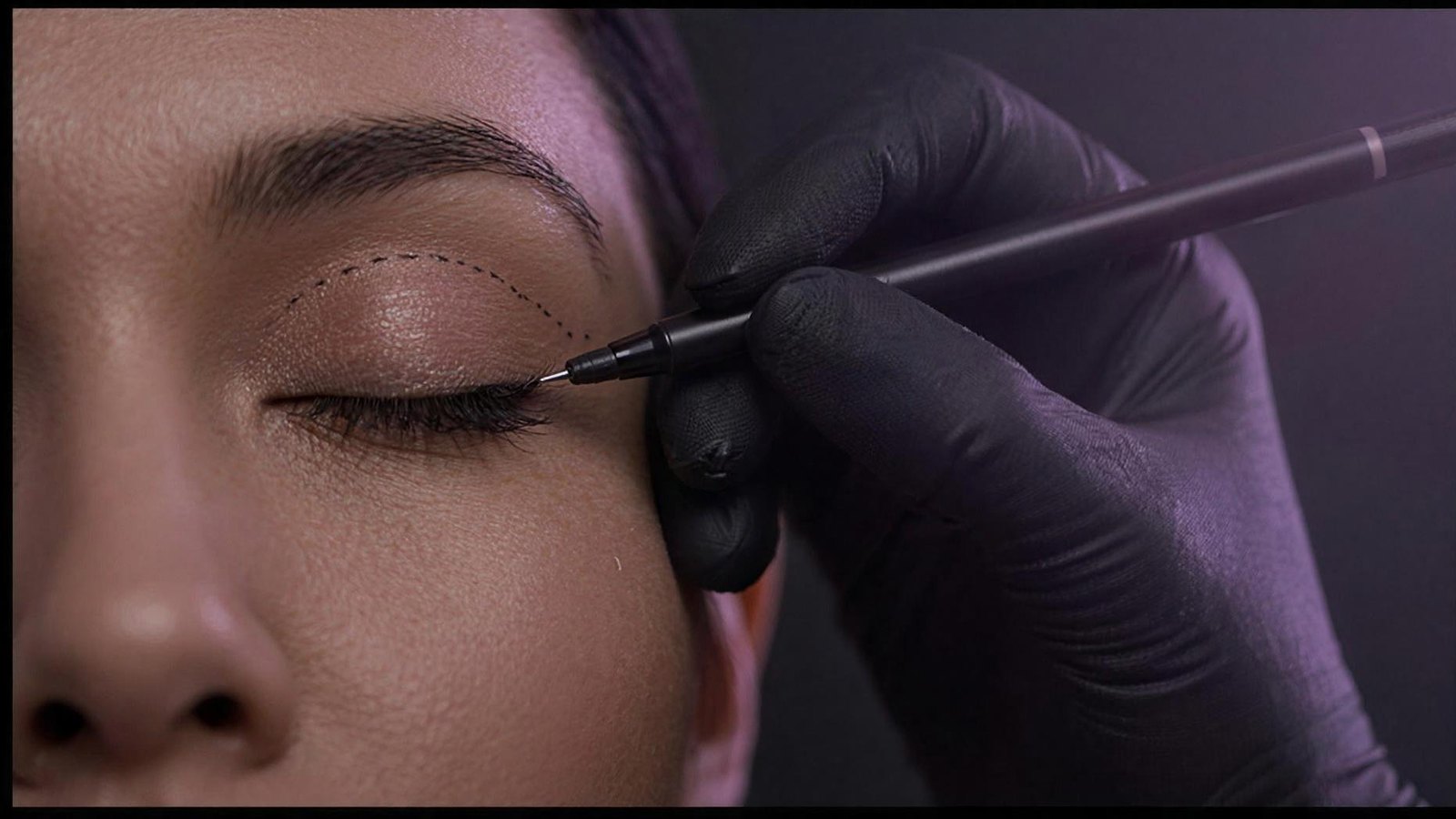
2. Marking

The surgeon may mark the planned incision and tissue to preserve before surgery. Natural asymmetry, brow position, eyelid closure, and the amount of skin that can be removed safely are considered.

3. Incision and Correction

Depending on the planned approach, skin, fat, muscle, or support structures may be preserved, repositioned, or conservatively removed. The exact steps vary with examination findings and the aim of maintaining safe eyelid function.

4. Closure

Incisions may be closed with sutures, skin adhesive, or another suitable method. Review and suture-removal timing depend on the material and wound healing. An incision in a natural crease may be less noticeable, but a scar-free result cannot be promised.

5. Early Recovery

Early monitoring, ocular-surface care, cold application, medicines, and the discharge decision are set by the individual plan. Antibiotics, the same care method, or same-day discharge should not be assumed for every patient; follow only the treating team's instructions.

Recovery and a Variable Timeline

Recovery varies with the extent of surgery, ocular surface, general health, and work or daily-life demands. The stages below are general topics reviewed during follow-up, not fixed promises:

  • Early period: Swelling, bruising, tightness, watering, dryness, or temporary blurred vision may occur. Use only the care advised in your personal discharge instructions.
  • As swelling changes: The course differs between people; sudden worsening should not be assumed to be routine healing.
  • Early follow-up: The wound, ocular surface, eyelid closure, and any sutures are assessed; return to makeup and contact lenses is decided individually.
  • Return to daily life: Return to work, driving, and social activity depends on vision, discomfort, medicines, and job demands.
  • Exercise and exertion: The surgical team determines a gradual return based on bleeding and swelling risk.
  • Later period: Appearance and scars may continue to change over time. The time to a settled appearance, scar visibility, and duration of the result vary between people.

Risks and Complications of Blepharoplasty

Like every operation, blepharoplasty has risks. Their type and likelihood vary with the ocular surface, eyelid anatomy, other health conditions, medicines, and the extent of surgery:

  • Swelling, bruising, tenderness, temporary numbness, or colour change
  • Dry eye, watering, irritation, light sensitivity, or temporary blurred vision
  • Bleeding, infection, delayed wound healing, or anaesthetic complications
  • Visible scarring, asymmetry, or a change in the natural eyelid crease
  • Incomplete eyelid closure, outward turning of the lower lid, or another eyelid-position problem
  • Under- or overcorrection, an unmet expectation, or need for additional treatment
  • Rare but serious complications such as bleeding behind the eye, injury to an eye muscle or ocular surface, and loss of vision

Important: Risks cannot be eliminated, and personal likelihood can only be discussed at examination. After surgery, sudden visual change or loss of vision, severe or increasing pain, marked one-sided swelling, bleeding, or another unexpected symptom requires urgent medical assessment.

Possible Changes and Limitations

The aim and visible change of blepharoplasty differ between people. Results cannot be guaranteed, and the following points should be considered in a balanced decision:

  • Excess skin or prominent fat pads may be reduced; the degree of change depends on anatomy and safe removal limits
  • Functional benefit may be possible for some people with documented upper visual-field obstruction; blepharoplasty does not correct every visual complaint
  • Lower-eyelid bags or fat distribution may change; dark circles, fine lines, and volume loss may not be fully corrected
  • Natural ageing continues; a particular duration or permanence cannot be promised
  • Asymmetry, scarring, or under- or overcorrection may remain, and further treatment may be considered in some cases
  • No surgery is also an option; expected benefit, limitations, and alternatives are considered alongside personal priorities

The blepharoplasty service page provides general information about the procedure; suitability cannot be decided without an examination.

Examination and Information

Anyone seeking an individual assessment for blepharoplasty should discuss the diagnosis, alternatives, expected benefit, limitations, and risks with a clinician before deciding. An examination does not mean that surgery will be recommended or that a particular result will occur.

For general appointment information, see the appointment page or use the WhatsApp contact channel.

This content provides general information and does not constitute medical advice. Diagnosis and treatment decisions require an individual assessment after examination by a qualified clinician.

Frequently asked questions

How do upper and lower blepharoplasty differ?

Upper-eyelid surgery commonly addresses excess skin in the lid crease and, when indicated, fat. Lower-eyelid surgery may address bags, fat distribution, excess skin, and eyelid support. Incision placement, technique, and risk profile depend on examination findings, and the two operations are not automatically performed together. Ptosis is also assessed separately from blepharoplasty.

How long does recovery from blepharoplasty take?

Swelling, bruising, and ocular-surface discomfort may occur early. Return to work or social activity depends on the person, job demands, and extent of surgery. Appearance and scars may continue to change over time. Your follow-up plan for sutures, makeup, contact lenses, driving, and exercise is more relevant than a generic online timeline.

What are the important risks of blepharoplasty?

Possible risks include bleeding, infection, visible scarring, asymmetry, dry eye, incomplete eyelid closure, and outward turning of the lower lid. Bleeding behind the eye and loss of vision are rare but serious. Sudden visual change or severe or increasing pain requires urgent medical assessment.

Related guides

Sources

This content provides general information, not a diagnosis or personal treatment recommendation. Suitability, risks, and alternatives require an individual medical assessment.

Author
hgcadmin

Enhance Your Beauty

Take the first step towards natural and aesthetic results. Schedule your appointment now.