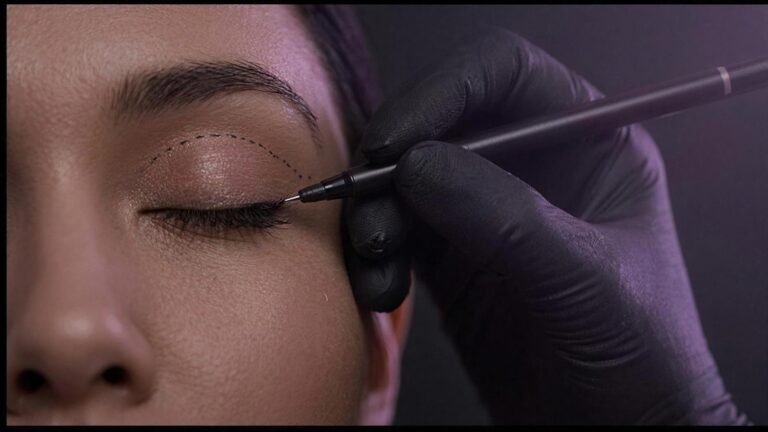

periorbital botulinum toxin and fillers do not target the same concern and are not suitable for everyone. Botulinum toxin temporarily reduces movement in selected muscles, whereas a filler is used to support volume in selected tissues. Because of the vascular and visual anatomy around the eyes, both approaches require an individual examination, a check of the product and indication, and a balanced benefit-risk discussion. Having no procedure is also an option; suitability, effect, or a natural-looking result cannot be guaranteed.
Why Do Changes Around the Eyes Require Assessment?
The appearance of the eye area does not have a single cause. Skin characteristics, facial movement, volume distribution, eyelid structure, ocular-surface health, swelling, pigmentation, and general health can contribute to concerns that look similar. Choosing a procedure from a photograph or age alone is therefore inappropriate.
- Lines that appear with movement may have a different source from lines visible at rest
- Dark circles may relate to pigment, visible vessels, shadowing, or several factors together
- Under-eye bags do not always indicate a lack of volume
- Previous surgery, injections, and dry-eye symptoms can change the assessment
- Expectations, possible benefit, limitations, and the option of no procedure should be considered together
The purpose of assessment is not to promote a particular procedure, but to distinguish the source of the concern and discuss safe options for the individual.
Botulinum Toxin Around the Eyes
What Is Botulinum Toxin and How Does It Work?
Botulinum toxin temporarily reduces targeted muscle activity by inhibiting acetylcholine release at the neuromuscular junction. It may be considered for some facial lines that become apparent with movement. It does not treat static hollowing, pigmentation, or every concern around the eyes, and it cannot be said to prevent all new lines.
Authorised indications, dose units, and safety information are not interchangeable between products. Some products are authorised for particular adult facial lines, while uses below the brow or in the lower eyelid may be unapproved depending on the product and country. Product, site, amount, and timing of any repeat treatment can be determined only after examination by an authorised clinician and review of the relevant product information.
Areas That May Be Assessed and Their Limits
- Crow's feet: Lines that become visible with movement at the outer corners are among the specific indications of some authorised products; suitability depends on the label and individual anatomy.
- Glabellar lines: Some products are authorised for particular lines associated with muscle activity between the brows; the aim and limitations should be explained during assessment.
- Brow area: Muscle balance and eyelid position differ between people. A brow lift or a particular appearance cannot be promised.
- Lower-eyelid lines: Product authorisation, ocular-surface health, and eyelid function require separate consideration in this sensitive area.
- Lines at the bridge of the nose: Adjacent areas outside the eye region require their own indication and anatomical assessment.
How Is an Individual Plan Determined?
Procedure time, discomfort, onset, and duration of effect can vary with the person, product, dose, and treatment site. Product information and an individual plan should therefore replace promises framed as fixed minutes, days, or months.
- History: Medical conditions, ocular-surface symptoms, previous procedures, pregnancy or breastfeeding status, and all medicines are reviewed
- Examination: Eyelid and brow position, muscle movement, asymmetry, and vision-related symptoms are assessed
- Product: The identity of the proposed product, its authorised indication, and patient information are explained
- Plan: Injection sites and amount come from individual assessment, not a standard online formula
- Expectations: The temporary nature of the effect and variation in its degree and duration are discussed
- Alternative: Deferral, no procedure, or assessment of another medical approach remains an option
Fillers Around the Eyes
Hyaluronic Acid Fillers
Hyaluronic acid (HA) is a polysaccharide also present in body tissues and is used in some filler products to support volume. However, HA products differ, and authorised use varies by product, indication, anatomical site, age group, and country. Authorisation of one product for a specific infraorbital-hollow indication is not blanket approval for every eye-area concern or every site, including the upper eyelid; current product information must be checked.
An attempt may be made to reduce some HA fillers with hyaluronidase, but this is an additional intervention with its own risks, does not apply to every filler, and cannot be guaranteed to reverse vascular occlusion or a visual complication. A suspected complication requires urgent medical assessment.
Conditions That Can Resemble Volume Loss
- Tear trough: Visible hollowing may relate to volume distribution; filler does not correct every cause of dark circles.
- Under-eye bags: Bags, swelling, or eyelid structure may create a situation in which filler is unsuitable.
- Fine lines: Superficial lines may not result from volume loss alone; product placement and tissue characteristics affect risk.
- Temple and cheek transition: Assessment of neighbouring areas considers overall facial balance; it does not guarantee a younger or more natural appearance.
Planning and Limitations
- Product selection: Composition, authorised site, contraindications, and patient information are reviewed for the specific product
- Technique: The choice of needle or cannula depends on the anatomical plan; no technique eliminates bruising or vascular risk
- Anaesthesia: Need and method are individual and product-specific; lidocaine should not be assumed to be sufficient or appropriate for everyone
- Early appearance: Swelling and bruising can affect the initial appearance; a final result cannot be promised for a fixed date
- Duration: Effect varies with product, site, and personal factors; a particular number of months cannot be guaranteed
- Follow-up: Expected findings and urgent warning signs should be covered in a written, product-specific plan
Can Botulinum Toxin and Filler Be Considered Together?
The two approaches may target different tissues and concerns. Considering them within one plan does not automatically produce a broader, better, or more natural result. Considering both within one plan requires review of product- and site-specific evidence as well as each person's risks separately and together.
- Botulinum toxin may temporarily reduce selected muscle movement
- Filler may support volume in selected tissues
- Combined planning does not remove the limitations, interactions, or separate complications of either procedure
Possible Side Effects and Urgent Warning Signs
The type, frequency, and duration of adverse effects vary by product, site, and person. Some reactions may be short-lived, while others can be delayed, persistent, or serious. Describing a risk as low does not mean that the outcome will be harmless or that experience reduces the risk to zero.
- After either injection: pain, tenderness, redness, swelling, bruising, infection, or an allergic reaction can occur
- Botulinum toxin: asymmetry, headache, dry eye, eyelid or brow droop, and double vision can occur
- Spread of toxin effect: generalised weakness or difficulty speaking, swallowing, or breathing requires emergency care
- Filler: nodules, inflammation, infection, migration, or material that is difficult or impossible to remove may occur
- Vascular occlusion: this can lead to tissue injury or necrosis, visual impairment, blindness, stroke, and permanent harm
Urgent warning: Seek emergency medical help immediately for unusual or severe pain, a sudden vision change, white-grey-blue skin near the injection site, or signs of stroke during or after filler injection. Difficulty swallowing, speaking, or breathing after botulinum toxin also requires urgent assessment.
A Safer Approach Before and After a Procedure
Before a Procedure
- Tell the clinician about all medical conditions, allergies, previous procedures, medicines, and supplements
- Never stop or change the dose of a prescribed medicine, including a blood thinner, independently; any change must be planned with the prescriber
- Do not follow blanket internet instructions about fasting, antibiotics, anaesthetics, or stopping supplements; use only an individual clinical plan
After a Procedure
- Follow written care and contact instructions specific to the product and treatment site
- Restrictions involving touch, exercise, heat, sleeping position, or skin care are not universal; ask for personal instructions
- The plan should explain how to distinguish expected swelling or bruising from unusual or worsening symptoms
- Do not wait for a routine review if there is a vision change, severe pain, skin colour change, a neurological symptom, or difficulty breathing or swallowing
Non-Surgical Approaches Around the Eyes: Who May Be Suitable?
Suitability is not determined by age or a wish to avoid surgery alone. In an adult, the cause of the concern, anatomy, eye health, general health, medicines, previous procedures, and realistic expectations are considered together.
- No fixed age range makes everyone an ideal candidate or excludes them
- Pregnancy, breastfeeding, neuromuscular disease, active infection, allergy history, or bleeding risk may require product-specific assessment
- Dry eye, eyelid function, or visual symptoms can change the plan
- After blepharoplasty, previous surgical details should be shared because anatomy may have changed
- A wish for rapid recovery, prevention, or a particular aesthetic result is not evidence of suitability
Assessment and Information
This article cannot determine personal suitability. The cause of the concern, the product's authorisation, non-procedural options, possible benefits, and serious risks should be discussed in an in-person medical assessment.
General contact information is available through the appointment information page and WhatsApp contact link.
This content provides general information; it is not a diagnosis, prescription, or personal treatment recommendation. Results can vary from person to person with every surgical or invasive procedure. Seek detailed advice from your clinician before a procedure.
Frequently asked questions
How do botulinum toxin and fillers differ?
Botulinum toxin temporarily reduces movement in selected muscles, whereas a filler supports volume in particular tissues. Dark circles, bags, lines, and hollows do not share one cause. An approach considered for one person may therefore be ineffective or carry unacceptable risk for another.
What is the most serious risk of periorbital filler?
Unintended injection into a blood vessel can interrupt blood supply and cause tissue loss, visual impairment, blindness, or stroke. Severe or unusual pain, a sudden vision change, or white-grey-blue skin during or after injection requires emergency medical assessment.
Can botulinum toxin and filler be used together?
They may be discussed within the same assessment for some people, but combining them does not guarantee a better or more natural result. Product, authorised site, previous procedures, medicines, ocular-surface health, and the separate risks of each treatment must be reviewed.
Related guides
Sources
- FDA — Dermal Fillers (Soft Tissue Fillers)
- FDA — BOTOX Cosmetic Prescribing Information
- American Academy of Ophthalmology EyeWiki — Botulinum Toxin Use in Oculoplastics
- Republic of Türkiye Ministry of Health — Regulation on Healthcare Promotion and Information Activities
This content provides general information, not a diagnosis or personal treatment recommendation. Suitability, risks, and alternatives require an individual medical assessment.