

Preparing for an eyelid consultation does not mean changing your entire care routine. Small details—when you wear contact lenses, how you see with your glasses and whether certain products are followed by discomfort—can make the conversation clearer. The aim is to describe your daily experience and expectations, rather than diagnose yourself or demonstrate that you need a procedure. Ask the clinic about any preparation instructions specific to your appointment.
Make a brief note of your lens and glasses routine
If you know your contact lens type, write it down or bring the packaging or product details. Useful topics include which days you wear lenses, when discomfort begins and what changes when you switch to glasses. “My eyes burn in the evening with lenses, but feel more comfortable with glasses” is more informative than simply saying that your eyes are sensitive.
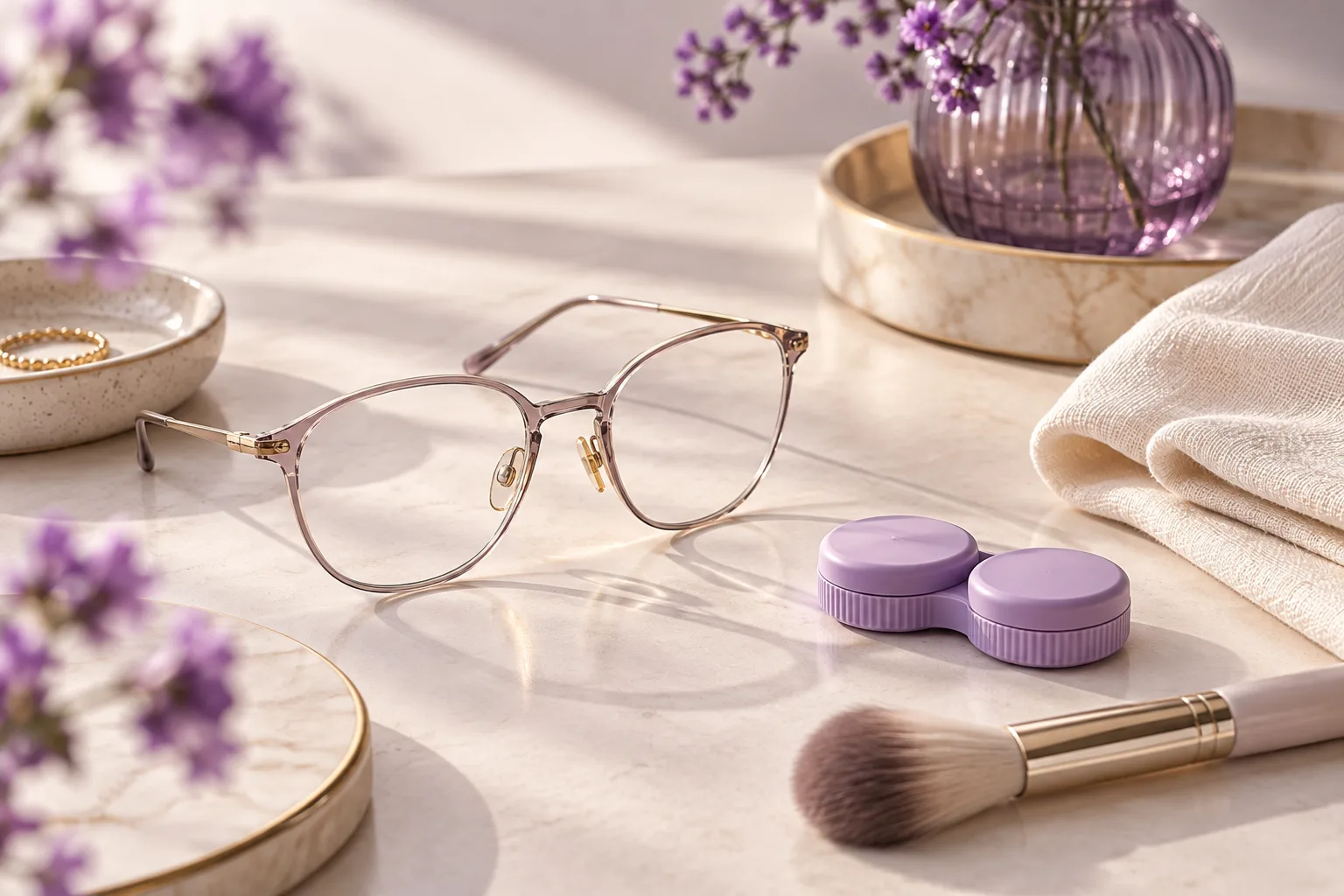
Bring your current glasses. Ask whether you should arrive wearing lenses or glasses and whether you need to remove your lenses beforehand. There is no single contact lens stopping interval that applies to every examination; follow the instructions for the assessment being planned.
List the makeup and care products you use
You can ask in advance whether the clinic would like you to arrive without eye makeup. A short list of your usual eye-area products, makeup remover and any recent eyelash treatment is a useful starting point. You need not bring every product; names or photographs of the packaging may help the discussion.
If itching, burning or redness appeared after a new product, describe when it started. Timing alone does not prove an allergy or another cause. Do not reapply a product that caused discomfort just to demonstrate the problem before your appointment; leave assessment to the clinician.
What should you bring or write down?
You do not need an extensive file. Start with the information you have:
- Your current glasses, contact lens details and a suitable lens case if relevant.
- A list of medicines, including eye drops, and known allergies.
- Previous eye conditions, operations and procedures around the eyes, with dates or approximate timing.
- Which eye is affected, how often symptoms occur and which everyday activities bring them on.
- Two or three questions you would like answered.
Do not stop prescribed medicines on your own. Say when information is unavailable; incomplete records do not prevent you from asking for advice.
Keep your plans for the appointment day flexible
Not every eyelid consultation involves the same tests. Ask whether a vision assessment or drops to dilate your pupils might be needed. If dilation drops are used, your vision may be temporarily blurred and light may feel uncomfortable. Plan your journey home according to the clinic’s advice and bring sunglasses. Consider possible tests before assuming that you will drive straight after the appointment.
Describe appearance concerns separately from discomfort
“I look tired in photographs” and “I struggle to keep my eye open in the evening” describe different concerns. Mention both separately if they apply. The guide to drooping eyelids provides background, while the blepharoplasty page explains how surgical options are considered. A consultation does not necessarily lead to a procedure.
Do not wait for a routine cosmetic appointment if you develop a sudden reduction in vision or significant eye pain. In particular, a painful red eye while wearing contact lenses needs urgent eye assessment; do not wear the lens.
Two common questions
Should I postpone if I have lost my lens case or old prescription?
Share the information available and explain what is missing. Ask the clinic which details are specifically needed for your examination.
Does arriving without makeup cover all the preparation?
No. Your symptoms, medicines and previous procedures also matter. Follow the clinic’s instructions for your particular appointment.
For a brief question about preparation, you can contact the clinic.
Sources

Related Posts

I Still Want to Look Like Me: Bringing Expectations to a Consultation
“Natural” means different things to different people. Separate what you want to preserve from what you want to...
Read More
Recovery After Eye Surgery: A General Safety Guide
A hub guide to variable healing after periocular surgery, general safety principles, urgent symptoms, follow-up, and return-to-work decisions.
Read More
Does One Eye Look Different? Discussing Asymmetry at a Consultation
Discuss asymmetry without labelling your face as flawed. Timing, daily function and sudden symptoms help guide the next...
Read More